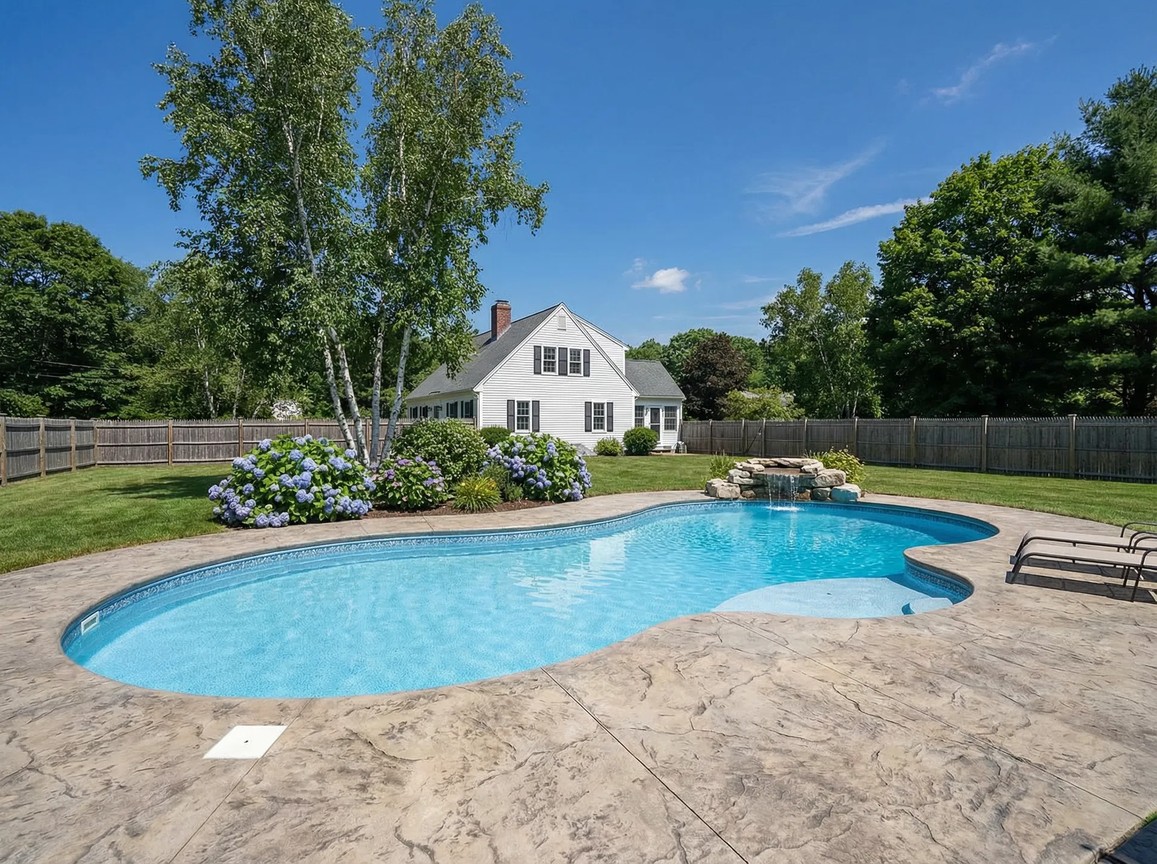
You check the pool one morning and the water level looks lower than it did yesterday.
You add water.
A few days later, it's low again.
At some point, almost every pool owner asks the same question:
Is my pool leaking, or am I just losing water naturally?
Swimming pools lose some water through normal evaporation, splash-out, backwashing, and everyday use. But repeated or excessive water loss can also indicate a problem with the pool, plumbing, equipment, fittings, or—in a vinyl-lined pool—the liner itself.
The important thing is determining whether the water loss appears normal or whether the pool is telling you something needs attention.
First: Some Pool Water Loss Is Normal
Not every drop in water level means you have a leak.
Evaporation varies considerably depending on weather and pool conditions. Hot temperatures, low humidity, wind, direct sunlight, water temperature, and the difference between daytime and nighttime temperatures can all affect how quickly water evaporates.
Heavy pool use can also lower the water level through splashing and water carried out of the pool by swimmers.
Backwashing certain filters and other routine pool maintenance can remove water as well.
That's why a single observation of a lower water level isn't necessarily cause for alarm.
What matters is whether the loss is persistent, excessive, or accompanied by other symptoms.
How Can I Tell Whether My Pool Is Leaking?
Start by paying attention to the pattern.
Ask yourself:
- How frequently am I adding water?
- Does the water continue dropping even when nobody is using the pool?
- Does the water level seem to fall faster when the circulation system is operating?
- Does it continue dropping when the equipment is off?
- Have I noticed wet or unusually soft areas around the pool or equipment?
- Is there visible water around the pump, filter, heater, valves, or plumbing?
- Has the pool recently begun behaving differently than it normally does?
The pattern of water loss can provide useful clues, although it doesn't necessarily identify the exact source.
Try a Simple Bucket Test
One of the easiest ways to compare pool water loss with normal evaporation is a basic bucket test.
Place a bucket on a pool step or another stable location where it can remain partially submerged without floating away.
Fill the bucket with pool water so the water level inside the bucket is approximately the same as the pool water level outside it.
Mark both levels or otherwise note their starting positions.
Leave the bucket and pool under the same weather conditions and compare the water levels after approximately 24 hours.
If the pool level drops noticeably more than the water inside the bucket, that can be an indication that the pool is losing water from something other than evaporation.
A bucket test does not locate a leak and is not a substitute for professional diagnosis, but it can help determine whether further investigation makes sense.
Common Reasons a Pool May Be Losing Water
There isn't one universal cause of pool water loss.
The source can be relatively simple—or it can require professional troubleshooting.
1. A Vinyl Liner Leak
For a vinyl-lined swimming pool, the liner itself is one possible source.
Small punctures, tears, deterioration, damage around fittings, or other liner problems may allow water to escape.
Sometimes damage is obvious.
Other times, finding the source is considerably more difficult.
An aging liner can also become more vulnerable to problems as the material changes over time.
If you suspect liner damage, avoid draining the pool to search for it yourself. Removing too much water from a vinyl-lined pool can create additional problems with the liner and pool structure.
If the liner has reached the end of its useful life, vinyl liner replacement may be the appropriate long-term solution rather than repeated patching.
2. Skimmers, Returns, Fittings or Seals
Water passes through and around multiple fittings in a swimming pool.
Skimmers, return fittings, gaskets, seals, faceplates, and other penetrations can become potential sources of water loss.
The actual problem may not always be visible from above the water.
This is one reason professional troubleshooting often involves looking at the entire system rather than assuming the liner is responsible.
3. Pool Equipment
Take a look around the equipment area.
Pumps, filters, heaters, valves, connections, and other components can sometimes leak.
A small equipment leak may be easy to overlook, particularly if the water drains away or evaporates before creating an obvious puddle.
Look for moisture, dripping, staining, corrosion, or areas that remain wet when the surrounding ground is dry.
Do not open pressurized equipment, remove electrical covers, or disassemble pool equipment unless you are qualified to do so.
4. Pool Plumbing
A plumbing leak may be less obvious because some pool plumbing is underground.
Changes in water loss depending on whether the circulation system is running can sometimes provide useful diagnostic information.
However, that pattern alone does not conclusively identify the location of a leak.
Underground plumbing concerns are one of the situations where professional diagnosis can save considerable time and unnecessary work.
5. Water Loss Around Steps or Other Pool Components
Depending on the pool's construction, steps, fittings, lights, and other components that penetrate or connect to the pool can potentially become sources of water loss.
A professional evaluation considers these components as part of the overall system rather than focusing on only one possible source.
6. Filter Backwashing or Maintenance
Sometimes the missing water isn't actually coming from a leak.
If you have a filter system that requires backwashing, consider how frequently it has been backwashed and how long the process has been running.
Maintenance-related water loss can add up, particularly during periods when the pool is also experiencing significant evaporation.
Does It Matter Whether the Pool Loses Water With the Pump On or Off?
It can provide a clue.
If water loss appears significantly different depending on whether the circulation system is running, that information may help a pool professional narrow down possible causes.
But it isn't a definitive diagnosis.
Pool systems contain suction-side plumbing, pressure-side plumbing, equipment, fittings, and the pool vessel itself. Different conditions can produce similar symptoms.
Instead of assuming one observation proves where the leak is, keep track of what you're seeing and share that information with the person diagnosing the pool.
Pay Attention to Where the Water Level Stops
If a pool is consistently losing water, homeowners sometimes notice that the water level eventually stabilizes around a particular height.
That can be useful information.
For example, if water repeatedly stops dropping near a skimmer, return, fitting, step, or another component, tell your pool professional.
It doesn't automatically prove that component is leaking, but the stopping point can help guide the investigation.
Do not intentionally allow a pool to continue draining to determine where it stops without professional guidance. Low water levels can create additional problems for the pool and circulation equipment.
Don't Ignore Repeated Water Loss
Continuously adding water may temporarily keep the pool usable, but it doesn't address the reason the water is disappearing.
Persistent water loss can also affect water chemistry and increase water usage.
More importantly, if the cause is a liner, fitting, plumbing, or equipment problem, addressing it earlier may help prevent the situation from becoming more complicated.
When Should I Call a Pool Professional?
Consider professional evaluation when:
- You are repeatedly adding significant amounts of water
- The pool is losing more water than surrounding conditions reasonably explain
- The bucket test suggests water loss beyond normal evaporation
- You see visible liner damage
- Water appears around pool equipment or plumbing
- The water level repeatedly stops near the same component
- The loss changes noticeably depending on whether the equipment is operating
- You cannot determine where the water is going
- You are concerned that continuing to operate the pool could cause additional problems
The goal is not simply to confirm that water is disappearing.
The goal is to determine why.
Experience Matters When Troubleshooting Pool Problems
Pool leaks can be deceptive.
The place where you notice a symptom isn't necessarily the place where the problem originates.
Effective troubleshooting requires understanding how the pool, plumbing, circulation system, equipment, fittings, and—in vinyl-lined pools—the liner work together.
Sapphire Pools provides professional pool service and troubleshooting backed by decades of hands-on pool-industry experience.
Our core expertise is vinyl-lined swimming pools, and we also provide applicable service and equipment troubleshooting for fiberglass and gunite/concrete swimming pools where the required work falls within our service capabilities.
We do not install fiberglass or gunite/concrete swimming pools.
Is Your Pool Losing Water?
If you're constantly reaching for the garden hose, it may be time to find out where the water is going.
Sapphire Pools can evaluate the symptoms, troubleshoot applicable pool systems and equipment, and help determine the appropriate next step.
Whether the issue turns out to involve the liner, equipment, plumbing, fittings, or another accessible pool component, understanding the cause is the first step toward correcting it.
Contact Sapphire Pools for professional pool service and troubleshooting.
Sapphire Pools Inc.
Professional swimming pool service throughout our applicable service area.
Technical content reviewed by Sapphire Pools Inc.