One of the most common questions we hear from pool owners across Central Massachusetts is: "How long should my vinyl liner last?"
The honest answer depends on several factors — your water chemistry, sun exposure, winter care, and the quality of the liner itself. But after more than 30 years of installing and replacing vinyl liners throughout Worcester County and beyond, we can give you a realistic picture of what to expect in our New England climate.
Average Lifespan: 7 to 12 Years
A well-maintained vinyl pool liner in New England typically lasts 7 to 12 years. Some homeowners get 15 years out of a liner with excellent care. Others see failure at 5 or 6 years due to chemical imbalances or poor winterization.
The national average is often quoted as 10 to 15 years, but that figure comes from regions with milder climates. Here in Massachusetts, Connecticut, and Rhode Island, our liners face conditions that pools in the Carolinas or California never encounter.
The difference between a liner that lasts 7 years and one that lasts 12 often comes down to liner quality. Cheaper liners (20-mil, single-layer) save money upfront but break down faster under UV and chemical exposure. Premium liners (28-mil or thicker, with UV inhibitors and fungicide backing) cost 15-20% more but consistently outlast budget options by 3 to 5 years in our climate.
Why New England Is Harder on Pool Liners
Freeze-Thaw Cycles
Central Massachusetts experiences dozens of freeze-thaw cycles every winter. The ground expands and contracts, shifting the pool walls and floor. A vinyl liner must flex with these movements without tearing or pulling away from the track. Over time, this repeated stress reduces elasticity and creates weak points.
Ice Pressure
When your pool is winterized, the remaining water and any accumulated snow melt can freeze solid. Ice expansion exerts pressure on the liner's surface. Proper winterization with an air pillow and correct water level helps, but the cumulative effect over 8 or 10 winters takes its toll.
UV Degradation
New England summers bring intense UV exposure — especially in June and July when the sun angle is highest. UV radiation breaks down the plasticizers in vinyl, causing the liner to become brittle, fade, and lose its flexibility. Pools without shade or a solar cover experience this faster.
Chemical Wear
Maintaining proper water chemistry is critical. Chlorine levels that are consistently too high (above 3 ppm) accelerate liner degradation. Low pH (below 7.2) makes the water acidic and attacks the vinyl surface. In our experience, chemical imbalance is the number one controllable factor in premature liner failure.
Signs Your Liner Needs Replacement
Most liners fail gradually before catastrophic tearing. The decline happens over months or even years — fading deepens, flexibility decreases, and small issues compound. Recognizing these early signs gives you time to plan a replacement on your schedule rather than dealing with an emergency mid-season.
Not sure if your liner is at the end of its life? Here are the warning signs we see most often during service calls in Brookfield, Spencer, Sturbridge, Charlton, and across the region:
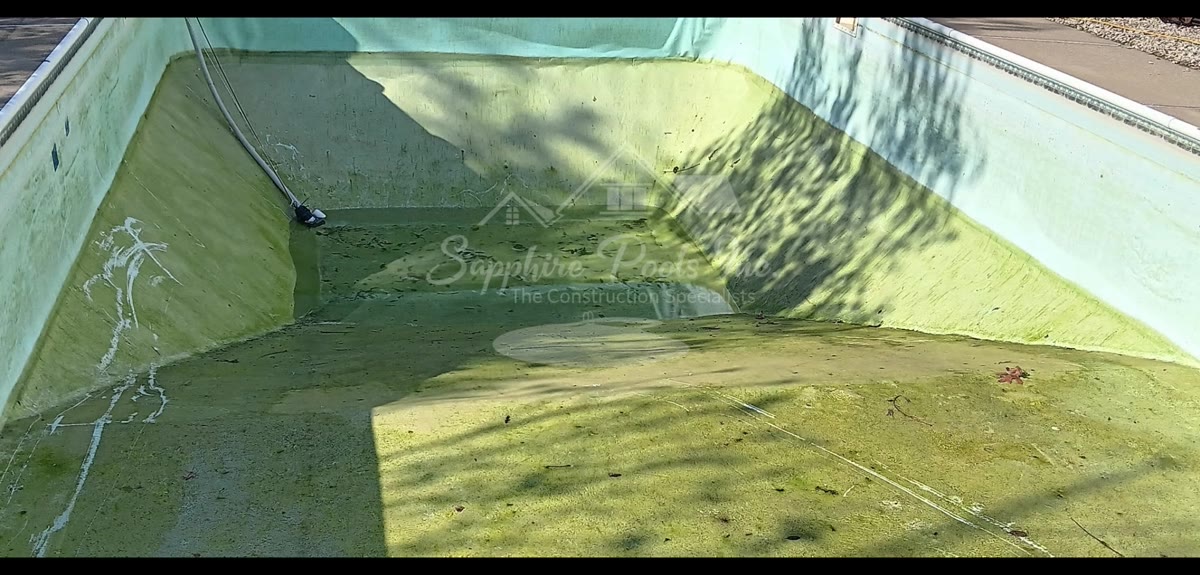
Faded vinyl pool liner before replacement — Charlton, MA. Note the severe discoloration and staining that indicates the liner has reached end of life.
Fading and Discoloration
A liner that has lost its color — especially above the waterline — has experienced significant UV and chemical breakdown. The fading itself is cosmetic, but it indicates the vinyl has lost plasticizers and is becoming brittle underneath.
Wrinkling and Stretching
Wrinkles that weren't there when the liner was installed mean the vinyl has lost its memory. It's stretching and can no longer hold its shape against the pool walls. Wrinkles also trap dirt and algae, making maintenance harder.
Cracking and Brittleness
If you can feel the liner cracking when you press on it — especially near the waterline or around fittings — replacement is overdue. A brittle liner will eventually tear, and a tear during the swimming season means an emergency repair or a drained pool.
Persistent Leaks
Small leaks can sometimes be patched. But if you're losing more than a quarter inch of water per day (beyond normal evaporation), or if patches aren't holding, the liner material itself has degraded past the point of reliable repair. Some liner leaks can initially appear as general pool repair issues — a dropping water level might seem like a plumbing problem before the liner is identified as the source.
Staining That Won't Clean
Deep stains that don't respond to enzyme treatments or liner cleaner indicate chemical damage to the vinyl surface. The staining has penetrated below the print layer, and no amount of scrubbing will remove it.
How to Maximize Your Liner's Lifespan
Maintain Proper Water Chemistry
Keep your pH between 7.2 and 7.6, chlorine between 1 and 3 ppm, and alkalinity between 80 and 120 ppm. Test at least twice per week during swimming season. This single habit has more impact on liner longevity than any other factor.
Winterize Correctly Every Year
Proper pool closing protects your liner through the harsh New England winter. This means balancing chemistry before closing, lowering the water level appropriately, using a winter cover, and placing an air pillow to absorb ice expansion.
Use a Solar Cover
A solar cover reduces UV exposure by up to 95% when the pool isn't in use. It also reduces chemical evaporation, which means more stable water chemistry. For Massachusetts pool owners, this is one of the best investments for liner protection.
Avoid Draining the Pool
A vinyl liner should never be fully drained unless you're replacing it. Without water pressure holding it in place, the liner shrinks, wrinkles, and can pull out of the track. Groundwater pressure can also push up from below, causing the liner to float or tear.
Address Small Issues Early
A small tear or a fitting that's pulling away from the liner is a minor repair today and a major problem next month. Prompt attention to small issues prevents water from getting behind the liner, which causes mold, wall damage, and premature failure.
When It's Time: What to Expect from a Liner Replacement
When your liner reaches the end of its life, vinyl liner replacement is a straightforward process when handled by experienced installers. Here's what the process looks like:
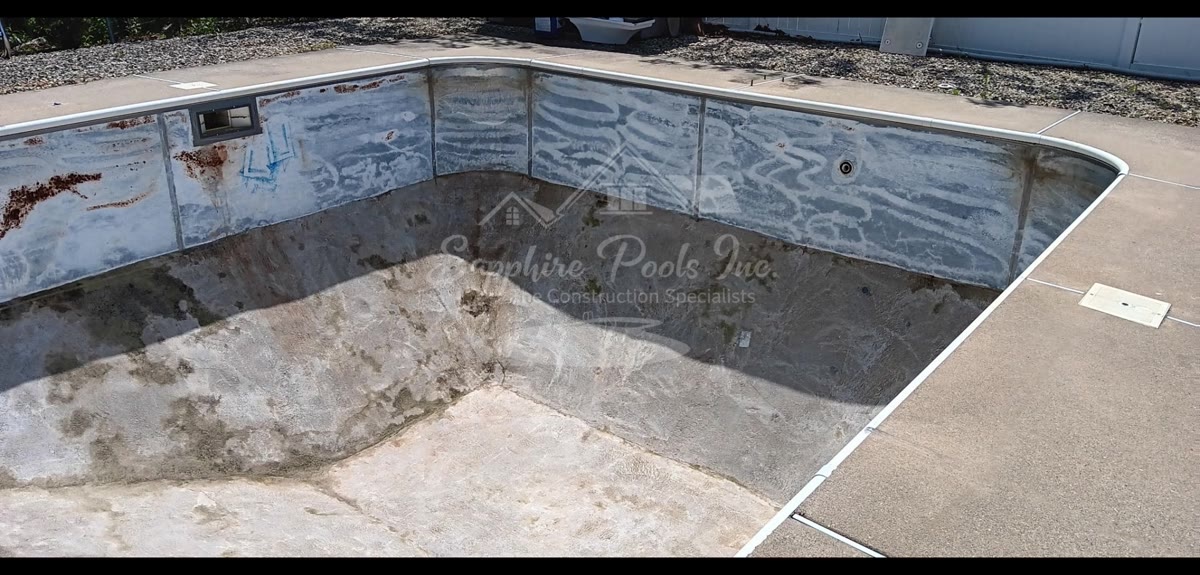
Pool walls inspected and prepped after old liner removal — Charlton, MA. Steel panels are checked for rust and repaired before the new liner is installed.
- Drain the pool and remove the old liner
- Inspect the walls and floor for rust, damage, or settling
- Make any structural repairs before the new liner goes in
- Measure and order a custom-fit liner (typically 2-3 weeks lead time)
- Install the new liner, fill the pool, and balance chemistry
The entire process — from draining to swimming — typically takes 3 to 5 days of on-site work, plus the manufacturing lead time for your custom liner.
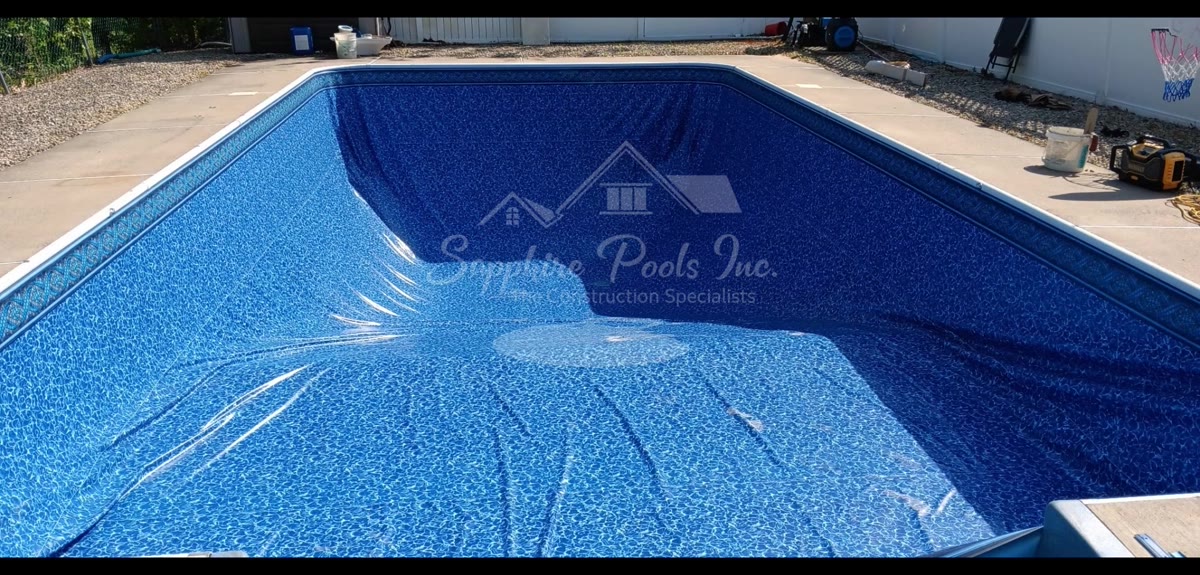
Completed vinyl liner replacement — Charlton, MA. New premium blue patterned liner installed and beginning to fill. This project was completed in spring 2026.
Cost Considerations
Liner replacement in Massachusetts typically ranges from $3,500 to $7,000 depending on pool size, shape complexity, and liner thickness. A 20-mil liner is standard, but we recommend 28-mil or thicker for New England pools. The added thickness provides better puncture resistance and longer life — usually worth the 15-20% price premium.
The Bottom Line
Your vinyl pool liner is a consumable component — it's designed to be replaced periodically. In New England's demanding climate, planning for replacement every 8 to 12 years is realistic. The key is recognizing the signs early, maintaining good chemistry throughout the liner's life, and working with experienced installers who understand our local conditions.
If you're seeing fading, wrinkling, or cracking — or if your liner is approaching the 10-year mark — it's worth scheduling an inspection. We'll give you an honest assessment of how much life is left and help you plan for replacement on your timeline, not in an emergency.
Sapphire Pools, Inc. has been replacing vinyl liners across Central Massachusetts, Connecticut, and Rhode Island for over 30 years. We're licensed (MA #197030), BBB A+ rated, and fully insured.
Call (508) 692-6092 for a free liner inspection and estimate, or learn more about our liner replacement service.
Serving Brookfield, Spencer, Sturbridge, Charlton, Worcester, Auburn, Oxford, Webster, Southbridge, Palmer, and communities within a 40-mile radius of New Salem, MA.
Reviewed by the Sapphire Pools Inc. installation team — over 30 years of vinyl liner replacement experience in Central Massachusetts and New England.
Q: How long does a vinyl pool liner last in Massachusetts? A: A well-maintained vinyl pool liner in Massachusetts typically lasts 7 to 12 years. Factors like water chemistry, winterization quality, and UV exposure significantly affect lifespan.
Q: What causes a pool liner to fail prematurely? A: The most common causes are improper water chemistry (high chlorine or low pH), poor winterization, excessive UV exposure, and ground movement from New England's freeze-thaw cycles.
Q: Can a faded pool liner still be functional? A: Yes, fading alone doesn't mean the liner needs immediate replacement. However, significant fading indicates the vinyl has lost plasticizers and is becoming brittle, so replacement should be planned within 1-2 years.
Q: How much does it cost to replace a vinyl pool liner in Massachusetts? A: Liner replacement typically costs $3,500 to $7,000 in Massachusetts, depending on pool size, shape, and liner thickness. We recommend 28-mil or thicker liners for New England pools.
Q: Should I patch my liner or replace it? A: Small tears in otherwise healthy liners can be patched effectively. If your liner is over 8 years old, has multiple patches, or shows widespread fading and brittleness, replacement is the better investment.
Technical content reviewed by Sapphire Pools Inc.