Vinyl Liner Pools vs. Fiberglass Pools: A Massachusetts Homeowner's Complete Guide

By The Sapphire Pools Team • Published 2026-07-21

The Real Difference Between Vinyl Liner and Fiberglass Pools

After building vinyl-lined inground pools across Central Massachusetts for over 35 years, we've had thousands of conversations with homeowners comparing their options. The vinyl-vs-fiberglass question comes up in nearly every initial consultation — and the answer depends on factors that most comparison articles never address.

This guide reflects what we've learned from actual installations in Brookfield, Charlton, Sturbridge, Spencer, and dozens of other Worcester County towns — not generic industry information.

"In our experience building pools in Central Massachusetts since 1990, we've seen how New England's freeze-thaw cycles, rocky soil conditions, and variable lot sizes make vinyl liner pools the most practical and versatile choice for most homeowners in our region." — The Sapphire Pools Team

How Each Pool Type Is Built

Vinyl Liner Pools

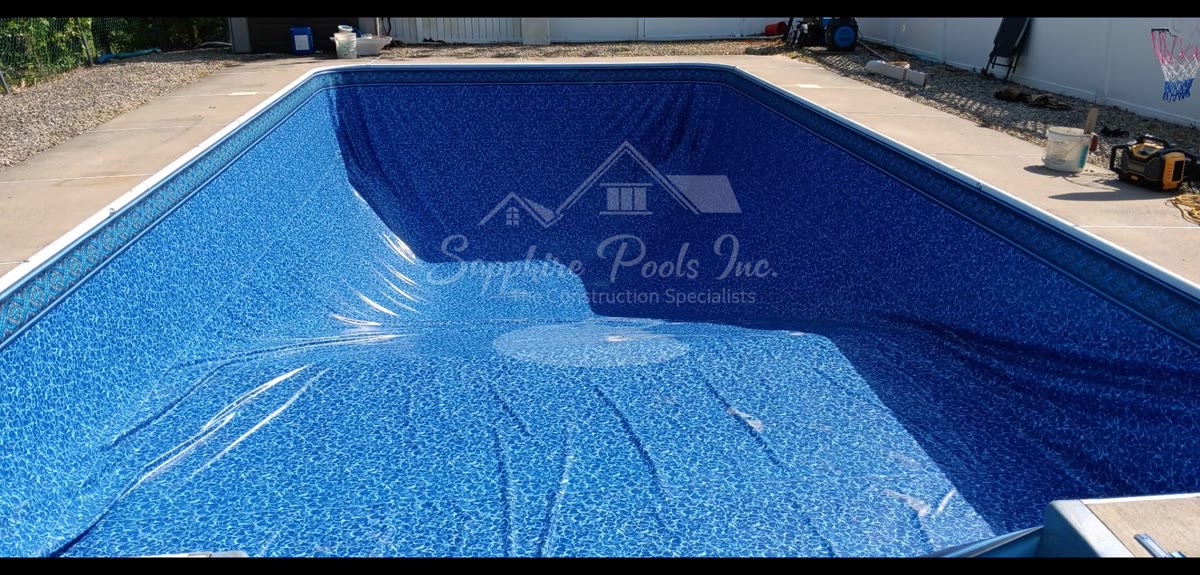
A vinyl liner pool starts with excavation, followed by the installation of a structural wall system — either galvanized steel panels or polymer panels — set on a concrete or vermiculite base. The floor is shaped and smoothed, plumbing is run, and a custom-measured vinyl liner is draped over the structure and secured at the top with a track system. The liner is then vacuum-fitted to conform precisely to the pool's shape.

Completed vinyl liner pool installation in Charlton, Massachusetts

A completed vinyl liner pool installation in Charlton, MA — custom shape with full patio surround

This construction method allows for virtually unlimited customization. We've built L-shapes, kidney shapes, freeform designs, and geometric pools with integrated tanning ledges — all using the same wall-and-liner system. The pool's shape is determined by how we configure the wall panels during construction, not by a pre-made mold.

Fiberglass Pools

A fiberglass pool is a one-piece shell manufactured off-site and delivered to your property on a flatbed truck. The shell is lowered into an excavated hole, leveled, backfilled with gravel or sand, and connected to plumbing. The shape, size, depth, and features are fixed at the factory — what you order is what you get.

The delivery logistics matter more than most homeowners realize. A fiberglass shell is typically 12 to 16 feet wide, which means the delivery truck and crane need clear access to your backyard. In many Central Massachusetts properties — particularly in towns like Brookfield and Warren where lots are wooded with narrow driveways — this can be a significant challenge or outright impossibility.

Side-by-Side Comparison

Factor Vinyl Liner Fiberglass
Shape optionsUnlimited — any shape, size, or depthLimited to manufacturer molds (typically 40-50 shapes)
Maximum sizeNo practical limit16 ft wide max (transport limit)
Depth optionsCustom — 3 ft to 8+ ft, variable within poolFixed by mold (typically 3.5 ft to 6.5 ft max)
Access requirementsStandard excavation equipmentWide, straight path for crane + flatbed
Freeze-thaw performanceLiner flexes with ground movementRigid shell — can crack or pop up if groundwater rises
Surface renewalNew liner every 8-12 years (like new pool)Gelcoat fading/osmotic blistering over time
Repair complexityLiner patches are simple and inexpensiveGelcoat repair requires specialist; structural cracks are major
Installation timeline2-4 weeks typical1-3 weeks (if shell is in stock)
Future modificationsCan add features, change shape with new linerCannot modify — locked to original mold shape

Why New England's Climate Favors Vinyl Liner Pools

Massachusetts has a frost line depth of 48 inches — meaning the ground freezes nearly four feet deep every winter. This creates significant ground movement through freeze-thaw cycles, particularly in the clay-heavy and rocky soils common throughout Worcester and Hampden counties.

A vinyl liner pool handles this movement because the liner is flexible. It stretches and contracts with the structure beneath it. The wall panels can shift slightly without catastrophic failure. When spring comes and the ground settles, everything returns to normal.

Fiberglass shells are rigid. While manufacturers have improved flexibility over the years, a one-piece shell sitting in New England soil faces two specific risks:

"One common mistake we see is homeowners choosing a pool type based on what works in the Southeast or Southwest without considering how Massachusetts winters affect the structure. A pool that performs perfectly in Georgia faces very different stresses in a Sturbridge backyard." — The Sapphire Pools Team

The Access Problem: A Real-World Example

A project we completed in Charlton illustrates why access matters. The homeowners had a beautiful wooded lot with a 10-foot-wide driveway that curved around mature oak trees. Their backyard was perfect for a pool — flat, well-drained, and private — but getting a 15-foot-wide fiberglass shell back there would have required removing three large trees and widening the driveway.

Vinyl liner pool on a wooded lot in Charlton, MA

A vinyl liner pool installed on a wooded Charlton property — no tree removal required

With a vinyl liner pool, we brought in standard excavation equipment, built the pool on-site, and preserved the landscape. The homeowners got exactly the pool they wanted — a custom freeform shape that worked with their terrain — without sacrificing the trees that made their property special.

This scenario is extremely common in our service area. Many properties in Sturbridge, Monson, Oxford, and Dudley have similar access constraints that make fiberglass delivery impractical.

Design Freedom: What You Can Actually Build

This is where vinyl liner pools have their most significant advantage. Because the pool is built on-site from configurable wall panels, you can design virtually any shape, size, or feature combination:

Feature Vinyl Liner Fiberglass
Tanning ledge / sun shelfCustom size and positionOnly if included in mold
Bench seatingAny location, any lengthFixed by mold design
Sport/lap configurationAny length, consistent depthLimited by available molds
Diving area (8+ ft deep)Yes — custom deep endVery few molds offer 8 ft depth
Pool width over 16 ftYes — no transport limitNo — highway transport limit
Attached spaIntegrated into designSeparate unit or specific mold only

For homeowners considering a luxury pool with custom features, vinyl liner construction is the only option that provides complete design freedom without the cost of gunite/shotcrete construction.

Long-Term Ownership: What to Expect Over 20 Years

Both pool types require ongoing care, but the nature of that care differs significantly:

Vinyl Liner Pool Ownership

Fiberglass Pool Ownership

Common Mistakes Homeowners Make When Choosing

After 35+ years of consultations, we've identified the most common misconceptions that lead homeowners toward the wrong choice:

  1. "Fiberglass is maintenance-free." No pool is maintenance-free. Fiberglass pools require the same water chemistry management, equipment maintenance, and seasonal care as any other pool. The surface is smoother (which can reduce algae attachment), but it still needs regular attention.
  2. "Vinyl liners tear easily." Modern vinyl liners are 27-30 mil thick (some areas reinforced to 40 mil) and remarkably durable. In our experience, most liner damage comes from improper winterization or sharp objects — not normal use. A well-maintained liner lasts 8-12 years in New England conditions.
  3. "Fiberglass installs faster, so it must be simpler." Faster installation doesn't mean simpler. Fiberglass installation requires precise leveling, proper backfill material, and careful water-filling sequences. If the shell isn't perfectly level or the backfill settles unevenly, you can develop structural problems that are extremely expensive to fix.
  4. "I can always change my mind later." With fiberglass, you cannot. The shape is permanent. With vinyl liner, you can change the liner pattern, add features during a liner replacement, or even modify the pool's shape by adjusting the wall panels.
  5. "The cheapest option is the best value." Value means total cost of ownership over 20+ years, not just the initial price. Factor in liner replacements for vinyl, gelcoat repairs for fiberglass, and the flexibility to adapt the pool as your family's needs change.

Wall Panel Options: Steel vs. Polymer

For homeowners choosing a vinyl liner pool, the wall panel material is an important decision:

Feature Galvanized Steel Polymer
Corrosion resistanceGood (galvanized coating)Excellent (non-metallic)
Structural rigidityVery highHigh
WeightHeavierLighter (easier handling)
Salt system compatibleRequires additional protectionFully compatible
Lifespan25-35 yearsLifetime (no degradation)
Best forTraditional chlorine poolsSalt water systems, long-term investment

We discuss wall panel options during every consultation and recommend the best fit based on your sanitization preferences and long-term plans. If you're considering a salt water system, polymer panels eliminate any corrosion concern entirely. Learn more about pool equipment options including salt systems.

Massachusetts-Specific Considerations

Factor Impact on Pool Choice
48-inch frost lineFavors flexible construction (vinyl) over rigid shells (fiberglass)
Rocky/clay soil (common in Worcester County)Vinyl liner pools handle variable soil conditions better; fiberglass requires uniform backfill
High water table (spring)Fiberglass shells risk floating; vinyl liner pools are heavier when filled and less susceptible
Wooded lots with narrow accessVinyl liner pools built on-site; fiberglass requires wide delivery path
Building permits (780 CMR)Same requirements for both types — see our Massachusetts permit guide
Short building season (April-November)Both types can be installed within the season; vinyl offers more scheduling flexibility

Why Sapphire Pools Specializes in Vinyl Liner

We made a deliberate choice over 35 years ago to specialize exclusively in vinyl-lined pools. That decision wasn't about what's easiest to build — it was about what delivers the best results for homeowners in our specific market.

Central Massachusetts properties present unique challenges: rocky soil, variable water tables, wooded lots with limited access, and one of the deepest frost lines in the country. Vinyl liner construction handles all of these challenges while giving homeowners complete design freedom and a lower total cost of ownership.

By focusing exclusively on one pool type, we've developed deep expertise that generalist builders simply don't have. We know exactly how vinyl liner pools perform in New England conditions because that's all we've built — for 35+ years, across 78 towns in Massachusetts, Connecticut, Rhode Island, and New Hampshire.

View examples of our work in the project gallery, or read more about why vinyl liner pools are the smart choice for New England.

Frequently Asked Questions

How long does a vinyl liner last in Massachusetts?

In our experience with Central Massachusetts pools, vinyl liners typically last 8 to 12 years depending on water chemistry maintenance, UV exposure, and winterization practices. Pools that are properly balanced and winterized with a solid safety cover tend to get the full 12 years. We offer vinyl liner replacement when the time comes.

Can a fiberglass pool pop out of the ground?

Yes, this can happen when groundwater pressure exceeds the weight of an empty or partially filled fiberglass shell. It's most common during spring thaw in areas with high water tables — which includes many properties in our service area along the Quaboag River valley (Brookfield, Warren, West Brookfield) and near wetlands. Proper hydrostatic relief valves reduce this risk but don't eliminate it entirely.

Is a vinyl liner pool cheaper than fiberglass?

Initial costs are comparable for similar-sized pools. Vinyl liner pools typically have a lower upfront cost for larger or custom-shaped pools because there's no expensive mold involved. Over 20 years, you'll replace the liner once or twice, but each replacement costs significantly less than fiberglass gelcoat refinishing. The total cost of ownership depends on your specific situation — we discuss this during every free consultation.

Do vinyl liner pools look as good as fiberglass?

Modern vinyl liner patterns are stunning — they replicate tile, stone, and solid color finishes that are visually indistinguishable from other pool types when the pool is filled. And unlike fiberglass (where you're limited to the manufacturer's color options), you can choose from hundreds of patterns and colors. When it's time for a new liner, you can completely change the pool's appearance. See examples in our project gallery.

What size vinyl liner pool can I build on my lot?

That depends on your lot dimensions and local zoning setbacks. Most Massachusetts towns require 5 to 15 feet from property lines (varies by municipality). Unlike fiberglass — which maxes out at 16 feet wide due to highway transport limits — vinyl liner pools have no practical size restriction. We've built pools from modest 12×24 rectangles to expansive 20×40+ freeform designs. During your consultation, we assess your specific lot and local zoning requirements.

Can I add a salt water system to a vinyl liner pool?

Absolutely. Vinyl liner pools work perfectly with salt water chlorine generators. If you're planning a salt system, we recommend polymer wall panels (rather than steel) to eliminate any long-term corrosion concern. The liner itself is fully compatible with salt water at proper concentrations. Learn more about equipment upgrade options.

What happens if my vinyl liner gets a hole or tear?

Small punctures can be patched underwater with a vinyl repair kit — it's a simple fix that most homeowners can do themselves. Larger tears may require professional pool repair. In our experience, liner damage is uncommon with normal use. The most common causes are sharp objects falling in, pets with untrimmed nails, or improper winterization allowing ice damage.

Does Sapphire Pools install fiberglass pools?

No. We specialize exclusively in vinyl-lined inground pools. This specialization means every project benefits from 35+ years of focused expertise in one construction method. We don't install fiberglass, gunite, or concrete pools. If you've determined that fiberglass is the right choice for your specific situation, we're happy to explain what to look for in a fiberglass installer.

How do I get started with a vinyl liner pool project?

Call or text us at (508) 692-6092 to schedule a free, no-pressure consultation. We'll visit your property, discuss your vision, assess site conditions, and provide a detailed proposal. You can also fill out our contact form and we'll respond within 24-48 hours. Read our complete planning guide to prepare for the conversation.

Key Takeaways

Related Resources

Ready to Discuss Your Project?

Call or text us for a free consultation.

Call (508) 692-6092
← Back to Pool Installation | All Resources