Why Consider a Vinyl-Liner Pool in New England?
Vinyl-liner pools are one option for homeowners comparing pool systems, property conditions, design preferences, equipment, and long-term ownership needs. Sapphire Pools specializes its installation work in supported in-ground and above-ground vinyl-liner pool projects.
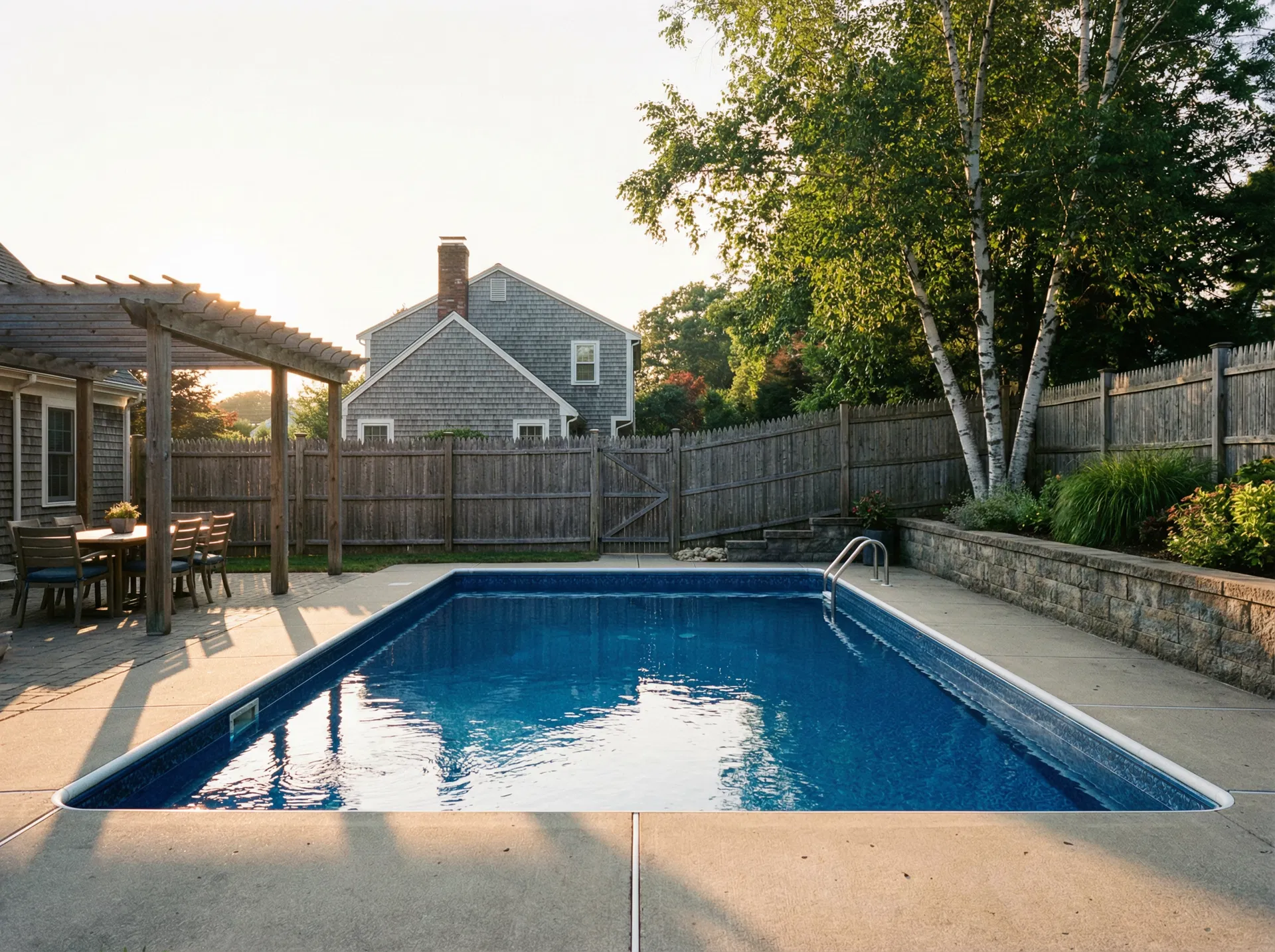
This guide explains practical factors to review. It does not claim that one pool type is appropriate for every property. For a broader comparison, read the vinyl-liner and fiberglass comparison guide.
Property and Climate Considerations
New England pool projects should account for freeze-thaw conditions, drainage, groundwater, soil, slope, utilities, property access, local requirements, and winterization. The appropriate construction details depend on the selected system and the conditions found at the property.
- Site access: Confirm how excavation equipment, materials, and pool components can reach the proposed work area.
- Drainage and groundwater: Review water movement and site drainage before confirming construction details.
- Local requirements: Verify setbacks, barriers, permits, inspections, utilities, and any property-specific review with the applicable authority.
- Seasonal care: Follow the equipment and liner manufacturers' instructions and a property-appropriate opening and winterization plan.
Design and Equipment Choices
Vinyl-liner systems are assembled for the selected project rather than delivered as a single preformed shell. Available shapes, dimensions, steps, seating, depths, liner patterns, wall systems, sanitation equipment, pumps, filters, heaters, lighting, and controls depend on manufacturer options, property conditions, local requirements, and confirmed project scope.
A design consultation should distinguish required pool components from optional features and related outdoor work. Sapphire Pools installs vinyl-liner pools only; it does not install fiberglass, gunite, or concrete pools.
Liner Care and Replacement
A vinyl liner is a replaceable pool component. Its condition can be affected by water chemistry, UV exposure, temperature, use, physical damage, winterization, installation, and pool conditions. Replacement timing should be based on the observed liner and pool—not a guaranteed lifespan.
When replacement is appropriate, the existing liner is removed, accessible conditions are reviewed, measurements and compatible material options are confirmed, and the selected replacement is installed according to the approved scope. Learn more on the vinyl-liner replacement page.
Questions to Review Before Choosing a Pool System
- Which pool systems are compatible with the property and available access?
- Which dimensions, depths, entry features, and equipment options are available from the selected system?
- What maintenance and replacement responsibilities apply to the selected components?
- Which local permits, barriers, setbacks, and inspections may apply?
- Which services are included in the written project scope?
Sapphire Pools' Installation Scope
Sapphire Pools specializes in supported in-ground and above-ground vinyl-liner pool installation. The company also provides vinyl-liner replacement, equipment upgrades, Sapphire Certified Pool Inspections, openings and closings in Central Massachusetts, and applicable repair or service based on the pool, property, requested work, and service-specific geography.
Contact Sapphire Pools or call (508) 692-6092 to discuss a property and requested project scope.
Frequently Asked Questions
How long does a vinyl liner last?
There is no guaranteed lifespan. Water chemistry, UV exposure, temperature, use, physical damage, winterization, installation, and pool conditions can all affect liner condition. Replacement should be based on inspection of the existing liner and pool.
Can a vinyl-liner pool use a salt chlorine system?
Compatible sanitation equipment may be available. The wall system, equipment, materials, bonding requirements, manufacturer instructions, and property conditions should be reviewed before a system is selected.
What designs are available for a vinyl-liner pool?
Available shapes, sizes, depths, steps, seating, liner patterns, and equipment depend on the selected system, property, manufacturer options, local requirements, and confirmed project scope.
Does Sapphire Pools install fiberglass or gunite pools?
No. Sapphire Pools installs vinyl-liner pools only. Separate inspection or applicable equipment and service work on other pool types does not imply installation, structural repair, resurfacing, replastering, or tile work on those pools.